
Are Video Game Movies the New Superhero Movie?
Now that we’re nearly halfway through the 2020s, I think it’s safe to say that the previous decade, the 2010s, was definitively the Era of the Superhero Movie. From the release of the cultural juggernaut that was 2012’s The Avengers up through the end of the decade, the Marvel Cinematic Universe and the rippling effects caused by its success dominated pop culture outlets, public conversation, and global box office. Consider this: Between 2014-2019 (with the exception of 2015), there were at least four superhero movies in the top ten highest-grossing movies of each year*. After Avengers: Endgame and the success of Marvel’s follow-up, Spider-Man: Far From Home, it seemed like their popularity was unstoppable.
Post-COVID, though, the success of a lot of these films trickled to a crawl. 2022 saw an uptick as, after the huge hit Spider-Man: No Way Home, audiences flocked back to theaters to see the newest Marvel movie in a way they just didn’t for most other new releases. However, word-of-mouth and critical acclaim began to wane, and suddenly thinkpieces all over the internet began talking about what it meant that films like Ant-Man and the Wasp: Quantumania and The Marvels were underperforming. In 2024, for the first time in nine years, a major movie release year only had one superhero movie in the top 10 highest-grossing of the year, Marvel’s Deadpool and Wolverine. If this is the sign that audiences want to see less superhero movies, what is it that they want to see MORE of?
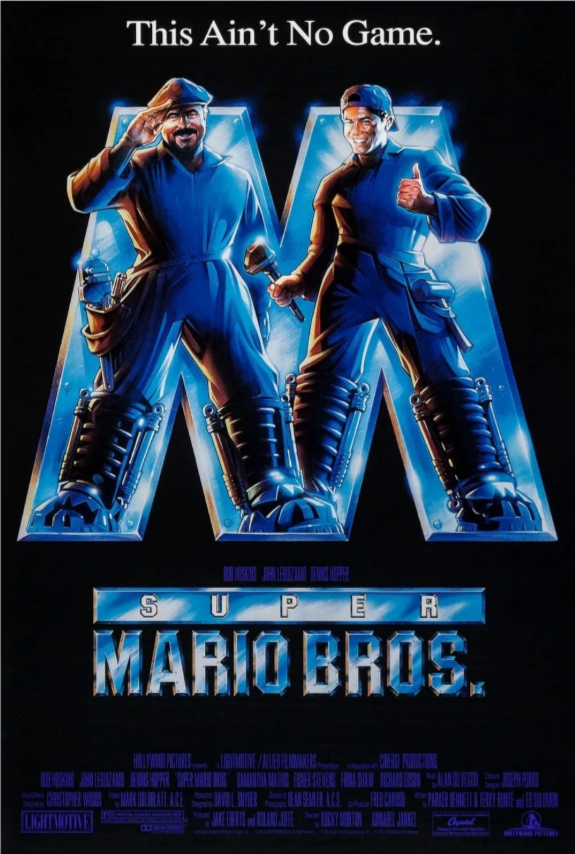
1993's Super Mario Bros., the first Hollywood film based on a video game
Enter the long-maligned video game adaptation genre. Despite being popular in arcades and homes from the 1970s onward, it took until the mid-90s for Hollywood studios to attempt big-screen adaptations of video games. When they finally tackled the genre with films like Super Mario Bros. and Street Fighter (1993 and 1994, respectively), critics roundly ridiculed the films for their ridiculous storylines and emphasis on mindless action, while fans of the games were often upset at the major changes studios made to the source material. Paul W.S. Anderson’s 1995 take on Mortal Kombat delivered some of the best reviews of the genre’s young history, but a quickie cash-in sequel two years later that flopped critically and assured the video game adaptation would be considered a more declasse subgenre of action movies.
The 2000s followed suit as, despite budgets getting bigger and the filmmaking becoming more professional, the reviews remained middling to terrible and adaptations continued to be a mixed bag in terms of success. For every franchise-starter like Resident Evil or Tomb Raider, there was a Max Payne or the whole directorial oeuvre of Uwe Boll (House of the Dead, Alone in the Dark, Bloodrayne, etc). Despite being released for over a decade, outlets by the end of the 2000s agreed that the genre had not really topped Anderson’s 1995 Mortal Kombat movie. That didn’t mean that studios stopped trying, though; there were underperfomers like Warcraft and Assassin’s Creed, mild hits like Need for Speed and 2018’s Tomb Raider, and constant news speculation about never-produced Halo and Bioshock movie adaptations. But outside of the surprisingly long-lasting Resident Evil franchise (which always maintained a relatively low budget compared to other Hollywood adaptations), few films really popped in the mega-blockbuster way that makes studios want to cash all their chips in on a genre.
In the meantime, though, video games began to dominate the cultural sphere in a way that they had never done before throughout their history. Kids who grew up playing video games continued the habit into adulthood, the barrier for entry to the hobby became much easier with the advancements in technology allowing younger people to play high-quality video games on their personal computers, and streaming became a viable career for internet personalities, with entertainers getting millions of fans who follow along as their favorite streamer plays a game. While video games had never been niche per say, they certainly achieved a kind of cultural prevalence in the 2010s they had never quite achieved before.
Studios took notice, and the more widely available or popular the game had become, the more successful a film adaptation could become. The Angry Birds Movie in 2016, while still getting only mixed reviews, became a surprise hit for Sony Pictures Animation. Surely the colorful characters and crude humor appealed to children, but one thing that can’t be discounted is the fact that Sony was adapting a free app played by millions of people worldwide, especially children. A sequel followed a few years later that got better reviews (some of the best yet for a video game adaptation) but underperformed compared to its predecessor, most likely due to how crowded the market was in late summer 2019.
By that point, though, the cat was out of the bag as far as popular video game adaptations go. Unlike the second-class action films they used to be, studios in 2019 were positioning their video game adaptations as major tentpoles, such as Pokemon: Detective Pikachu and Rampage, and before COVID shut down movie theaters and the global box office for a period of time, the last major hit film in theaters was 2020’s Sonic the Hedgehog. That film, in particular, signaled a shift in the mindset of producers who adapted video game adaptations. After the original trailer dropped, fan circles on the internet flew into an uproar over a redesigned Sonic the Hedgehog, giving him more “realistic” facial features that felt unnatural for the character. Following this backlash, Paramount delayed the film by three months and did a complete overhaul of the Sonic character, making it more true to his video game design.
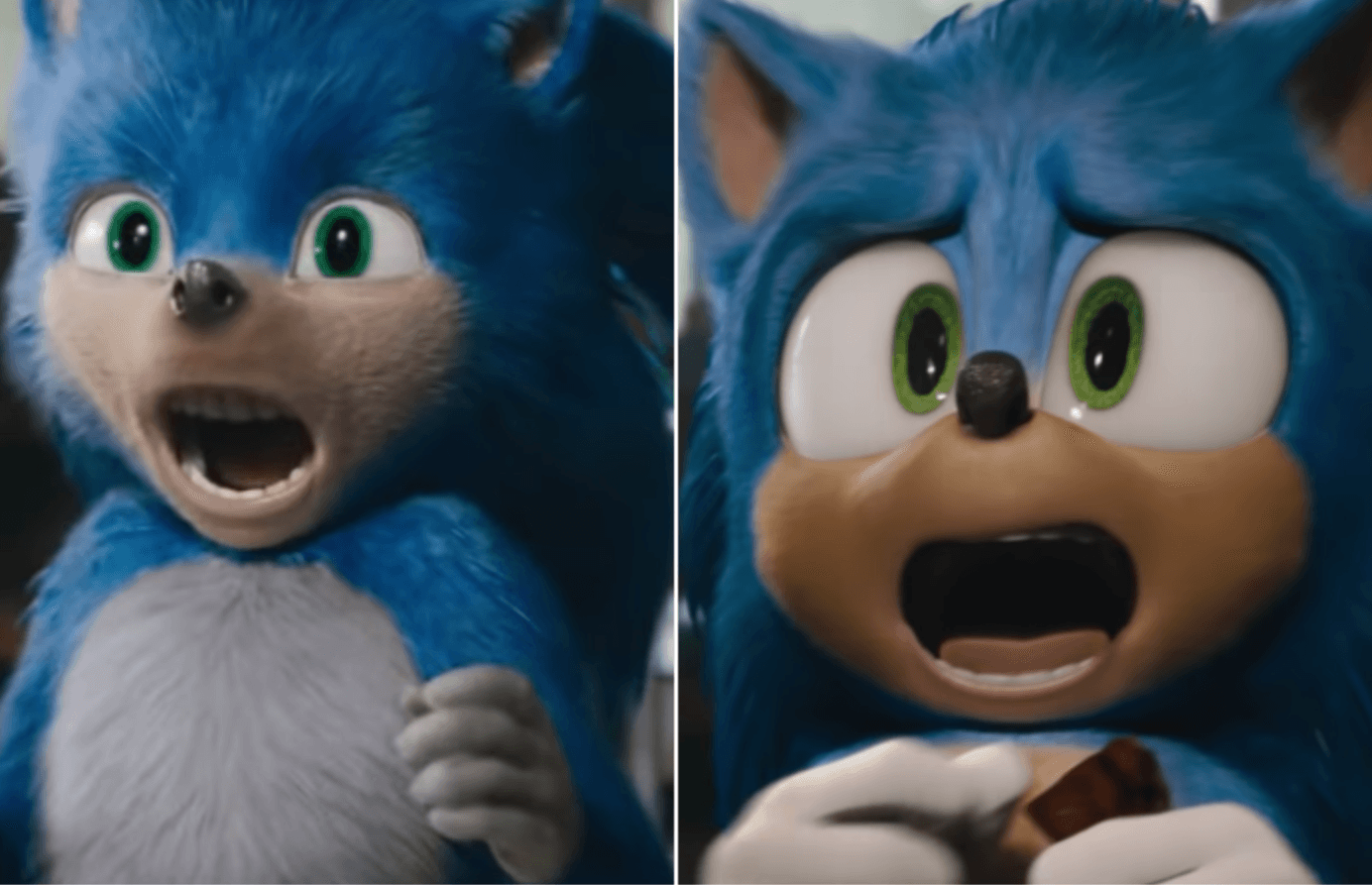
The original character design from 2020’s Sonic the Hedgehog vs. the updated one
Within a couple years, studios had taken the hint: The key to box office success was a pure fidelity to the source material, adding in as many fan-pleasing moments to the film as they can that might pad over other narrative concerns that critics might have. Sonic the Hedgehog 2 was an even bigger hit than the first one, but the big sign that the culture was shifting away from superhero movies towards the video game adaptations was the enormous success of The Super Mario Bros. Movie, Illumination’s adaptation of the long-running franchise. Universal had a number of elements working in their film’s favor: An Easter release means more families have time to see it together, a brisk 90-minute runtime meant that theaters could fit in more showtimes, and the fast-paced film delivered viewers to a different world practically every 10 minutes, with the film chock-full of references to games and media from decades of Mario lore that prevent the film from ever getting boring. Of course, if you’d never heard of Mario in your life, the film would likely be incomprehensible, as it sacrificed plot cohesion for the sake of fan service. But those fans numbered in the hundreds of millions worldwide, and they didn’t seem to mind any problems the film might have so long as they could finally see their favorite characters on the big screen.
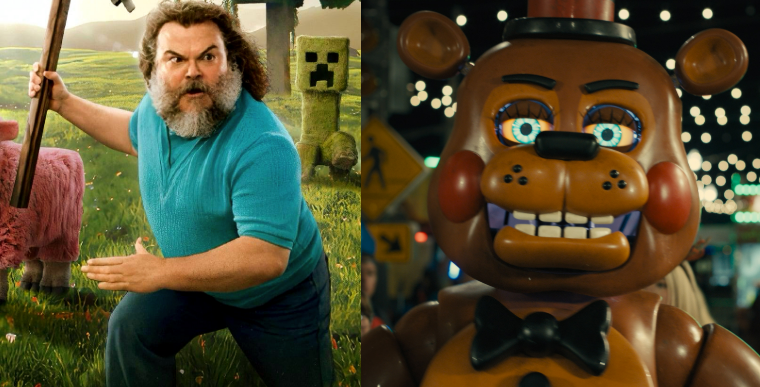
That same year, Universal (again) released a live-action adaptation of Five Nights at Freddy’s from mega producer Jason Blum. Following Blum’s usual production model, the film cost a mere $20 million but raked in nearly $300 million worldwide. While the Mario film was based on a Nintendo property that’s been internationally famous for over 40 years, FNAF was an independently produced game made by somebody with a background in Christian game development that really started to spread in popularity thanks to streamers making viral reactions to the game’s sense of dread and terror. While the reviews were uniformly negative, the franchise’s primary audience of older children didn’t seem to mind as the film ended up making $80 million on its opening weekend alone.
Cut to 2025, and the highest-grossing film of the year at the domestic box office is April’s A Minecraft Movie, a movie that combines the family-friendly comedy vibe of The Super Mario Bros. Movie (as well as that film’s Easter release date) with the viral popularity of a game that surpasses even Five Nights at Freddy’s. And speaking of FNAF, that film’s sequel just opened to a surprising $64 million at the domestic box office, proving that there’s still plenty of desire out there to see the expansion of that franchise on the big screen.
At a time when superhero films are struggling to retain their cultural dominance and continue on a downward trend of profitability, the video game adaptation has emerged as a potentially new moneymaking champion. Next year shows no signs of slowing down, with sequels to Silent Hill and Mortal Kombat coming out alongside new adaptations of the Resident Evil and Street Fighter series, all before the long-awaited Legend of Zelda movie and the Minecraft sequels hit theaters in 2027. At a time when theaters need a steady stream of solid performers to stay in business and continue to provide lasting memories for audiences of all ages, I think these video game adaptations provide a healthy, exciting way to engage with younger audiences…just so long as there isn’t another “Chicken Jockey” viral moment.
*In 2018 alone, a full 50% of the highest-grossing movies of the year were superhero movies - maybe even 60% if you consider Incredibles 2, which while about superheroes, is not based on any preexisting comic books like the Marvel or DC films.