
The Surprisingly Positive Masculinity of Jackass
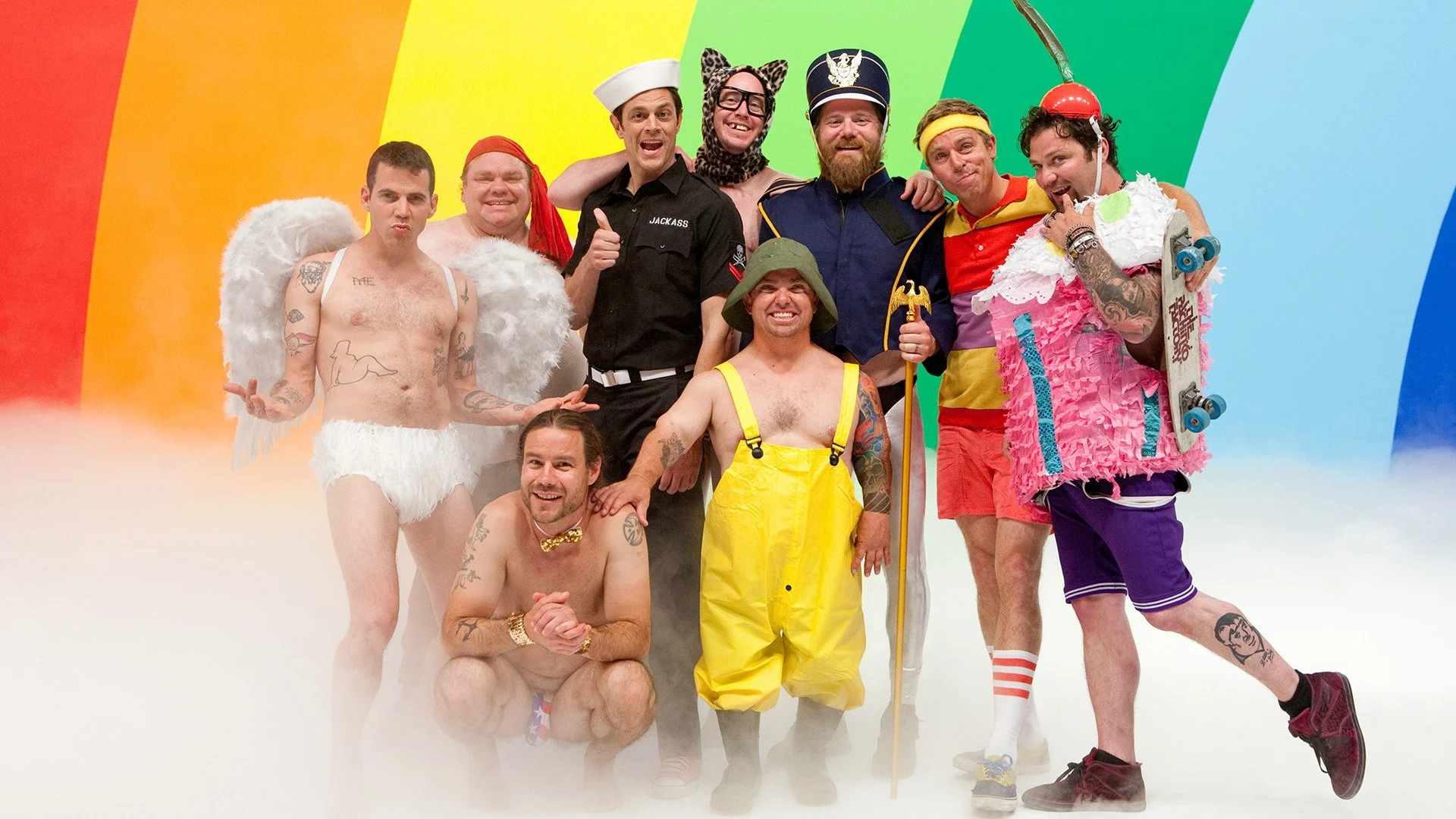
Jackass returns to theaters this week in what Johnny Knoxville, Jeff Tremaine, and the whole cast swears is their last hurrah. Back in the early 2000s, when the franchise only consisted of one notoriously disreputable TV show, I can’t imagine any angry parents, cultural commentators, or even U.S. senators who rallied for its cancellation thought it would one day become a critically and culturally beloved institution, a monument to man’s capacity for both creativity and stupidity. Yes, with the last entry (Jackass Forever) sitting at 86% on Rotten Tomatoes and 3.5 on Letterboxd, it is now safe to say that Jackass has become reputable. But as so many other bastions of a certain type of dude-centric comedy have become lost to time, Jackass always retains a certain cultural staying power. Because, unlike so much other culture of the time, Jackass showcased a positive masculinity that’s possibly needed even more today than when it first debuted.
“Wait,” I hear you say, “you mean the series where men are constantly hitting each other in the groin and tasing each other represents a POSITIVE masculinity?” Well…yeah, actually. At a time when TV channels like SpikeTV and Fox hyped up a stylized hypermasculinity that often came in the form of brute strength, misogyny, and frequent homophobia, the guys on Jackass were doing everything they can to NOT appear manly.
“Today’s debate: Is it wrong to be strong? You be the judge”
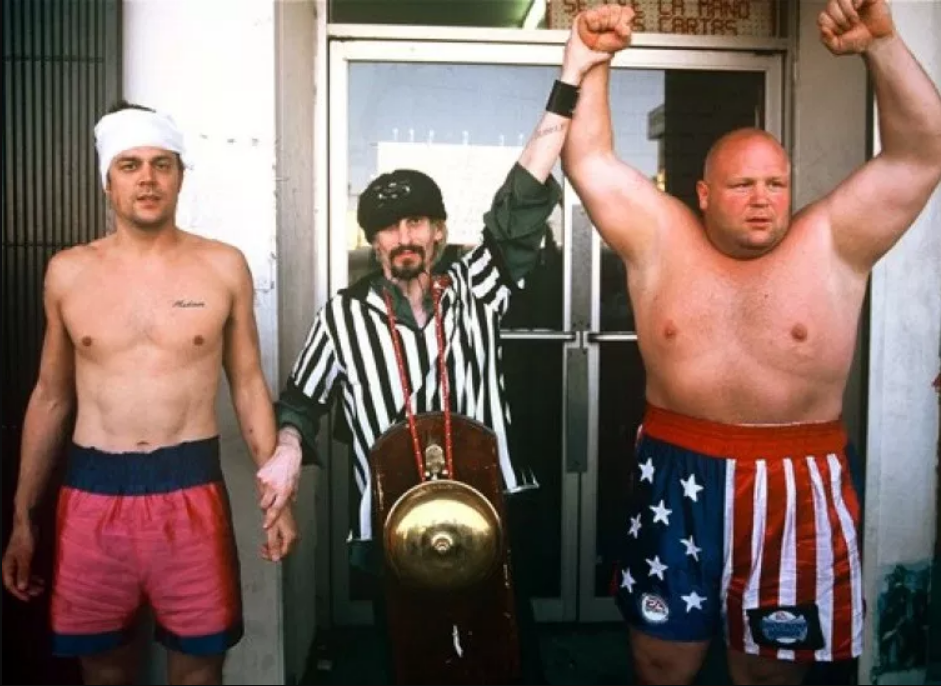
A severely concussed Johnny Knoxville moments after being knocked out by professional boxed Butterbean (with Loomis Fall as referee)
For one thing, the stars of Jackass never try to appear strong or tough. In an era of influencer boxing where Internet personalities get in the ring to try and go toe-to-toe with some of the best boxers in the world, it’s refreshing to see skits like “Department Store Boxing” or “Ass Kicked by Girl” where the whole premise revolves around how not strong men like Johnny Knoxville and Ryan Dunn are. These two men are not trying to be role models (indeed, there are warnings before every episode and movie telling people to not view these guys as role models), but for young men who also weren’t the toughest kids in school, they provided a fun alternative to the macho tough guys seen on TV. What mattered in Jackass was that you had the bravery to go in the ring and look like an idiot for the amusement of your friends, not that you were the toughest man on screen.
“It’s Just Loud. It’s Gonna Hurt a Lot, But It’s Just Loud.”
Some of the stunts featured in Jackass are undeniably cool. After all, the show sprang from the minds of a bunch of guys who worked for a skateboarding magazine and had connections in that industry. But for the most part, everybody comes up with stuff or finds themselves in situations that are impressive for how crazy you have to be to attempt it, not because only the strongest of men can pull it off. There’s nothing traditionally masculine about Steve-O sticking a fish hook through his cheek and swimming in shark-infested waters like he’s bait, or he and Dave England playing tetherball with a hive full of angry bees, but what matters in that moment is the courage they have to put themselves in harm’s way for entertainment purposes.
“Why would you burn your friend in the first place, Dunn?” “Cause it was funny.”
One of the most important elements of this courage is the series’s dedication to showcasing the deep friendship shared among its cast. Whether or not they’re actually close outside of filming, when they’re with each other on camera, there’s a real sense of camaraderie and “we’re all in this together” even as they’re actively hurting each other. When a cast member does something incredibly stupid, there’s usually at least a few others nearby (even if they’re only off-camera) to laugh and cheer them on. And as the victim of the stunt or prank gets up and dusts themselves off, usually the rest of the team is there to hug or congratulate them for attempting it.
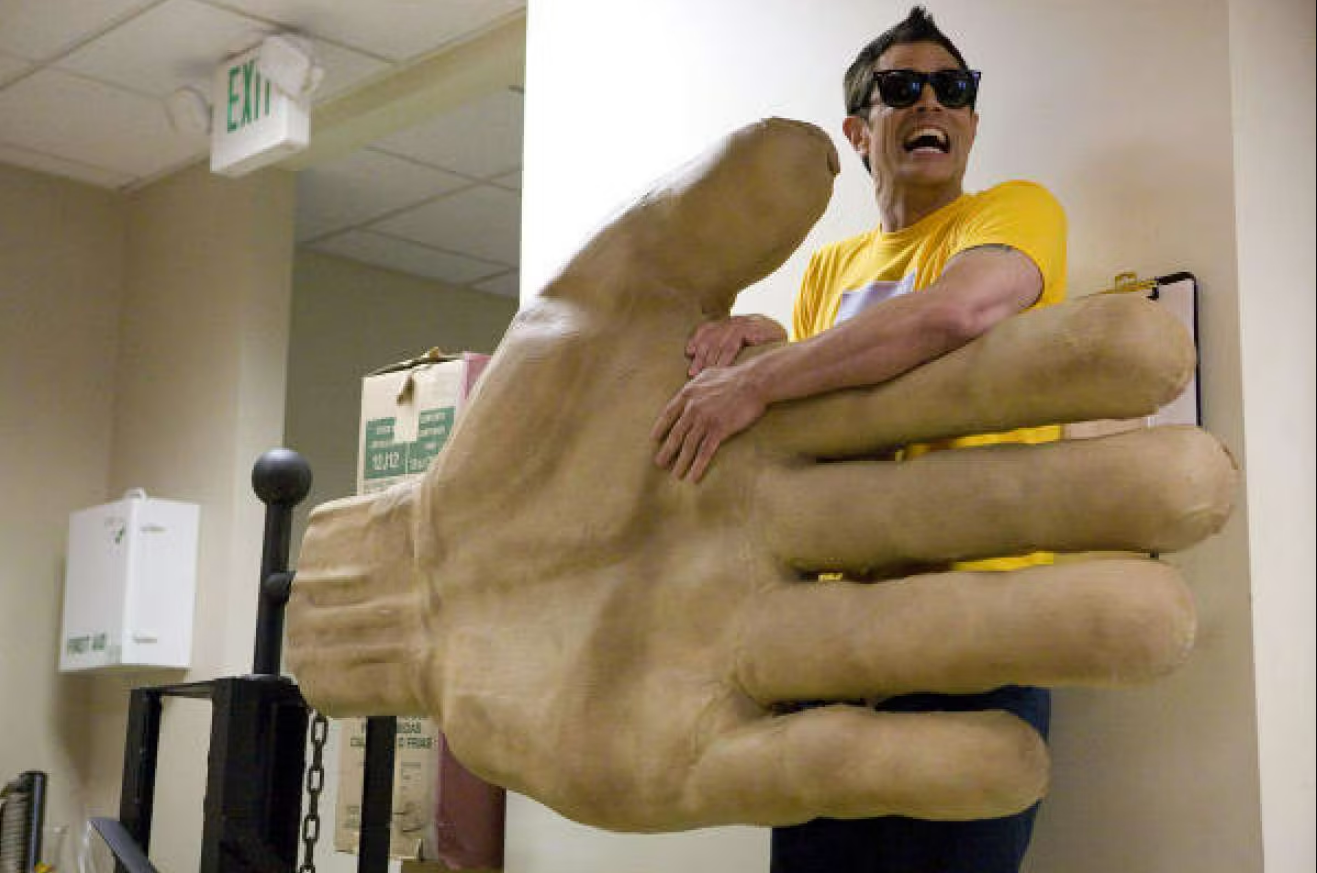
Knoxville with a comically large hand to greet his friends with
While the non-believers might see the laughter and goading as a toxic form of convincing others to do things that might cause irreparable harm to their bodies, I believe that the sense of community in Jackass represents a positive form of male bonding that approaches wholesome. Take the High Five bit from Jackass 3D, where Johnny Knoxville has rigged up a giant foam hand on a spring so it smacks cast members in the face as they walk into the staff kitchen. The first victim of the prank, Ryan, falls on the ground and immediately is rolling around with laughter when he realizes he’s been had. Even Ehren, who is carrying a tray of hot soup that gets all over him, and Bam, who ends up covered in flour (long story), both laugh as they get up off the ground and give their bros a hug. You don’t laugh because it’s embarrassing for the marks like so many prank shows of the day, you laugh because the prank is creative and it’s enjoyable to see how much joy they all get out of being fooled. Put any group of young guys together for long enough and they might attempt much of what the Jackass guys try to do, but the reason why the series continues to work to this day is because their bond feels tight when they’re on screen, and you get the sense that there’s nothing they could do to each other that wouldn’t still end in a laugh or a hug.
“I Was Lon Chaney’s Lover!”
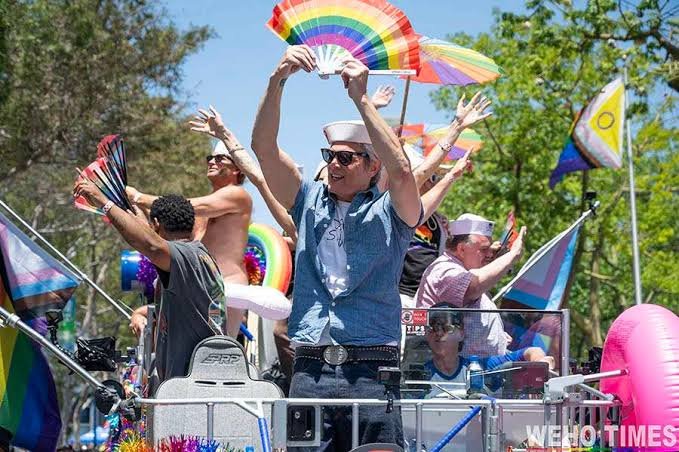
The Jackass cast on a float at the 2026 West Hollywood Pride Parade
But perhaps the most revolutionary aspect of Jackass in hindsight has been its open acceptance of queer culture at a time when so much of male-centric comedy revolved around gay panic jokes. From the second the original series premiered, the stars of Jackass were never afraid to push themselves to the limit of acceptable middle-class culture if it meant getting a laugh, and that included frequent nudity and stunts/pranks involving their own genitalia. And if that alone didn’t make it obvious that they were trying to challenge a young generation being raised on “no homo” gags, the movies later on frequently invoked images of camp and gay culture, such as rainbows (including in the logo of Knoxville and Tremaine’s production company, Dickhouse), phallic imagery and items, and the inclusion of queer icons like Rip Taylor and John Waters.
For a long time, the question of “Is it just me or is Jackass…kinda gay?” was more of a joke than anything that seemed intentional on the part of the creators, but in 2010 around the release of the third movie, the cast finally confirmed that this embrace of queer culture and a willingness to risk accusations of being gay was entirely intentional. In an interview in Vanity Fair, Knoxville laughed at the idea of the show only being considered “a smidge” gay, while Steve-O said “We always thought it was funny to force a heterosexual MTV generation to deal with all of our thongs and homoerotic humor. In many ways, all our gay humor has been a humanitarian attack against homophobia.” When the skateboarders, punks, and artists who started Jackass got a deal to make a show on MTV where the youth of America would watch, they used that opportunity to subtly confront established social conventions like homophobia and laugh about it.
“If you’re gonna be dumb, you gotta be tough.”
In many ways, that’s been the thesis of Jackass and the entire franchise for 25 years: You can be whoever you want to be, just so long as you’re able to laugh about it. There’s no macho posturing or no real competition to see who can be the toughest or the coolest, and there’s certainly no discomfort around things like sexuality and gender, but there is a genuine bond shared by the laughter and pain that the cast have all experienced together. And when you’re young and can’t relate to a lot of other guys in your school, the bond that these men share while acting like overgrown kids can be something to look up to.
Now, any cursory search into the cast’s personal lives reveal that they’re not great role models when the cameras are off. A lot of them have dealt with personal demons like drug addiction and violence, not to mention some very real jail time a few of them have faced in the past. But within the constructed framework of Jackass, that all fades into background noise, barely acknowledged except for maybe an offhand joke. Alcohol and drugs are rarely brought up - especially after Steve-O went sober following a particularly harrowing period of addiction - and most injuries can be handled by just walking them off, rarely following the cast to the hospital a lot of them end up in after a day of filming.
“That’s the story of Jackass right there: Just pissing in the wind”
Because the series has always been a fantasy: One that emphasizes friendship, creativity, and a healthy sense of humor above all else. And despite taking place in certain subcultures where toxic masculinity has flourished over the years, Jackass the series has remained a place where men are free to be themselves - as dumb and dangerous as that might be at times - without the need to put others down because of gender, race, or sexuality. While at one point, it may have seemed like a harbinger of doom for American culture at large, now we can look back on it and realized that it likely helped an entire generation of kids learn to be comfortable just being themselves, a great example of a more positive form of masculinity if there ever was one.