
The Under-Coyote: How Coyote vs. Acme Made It to Cinemas Against All Odds
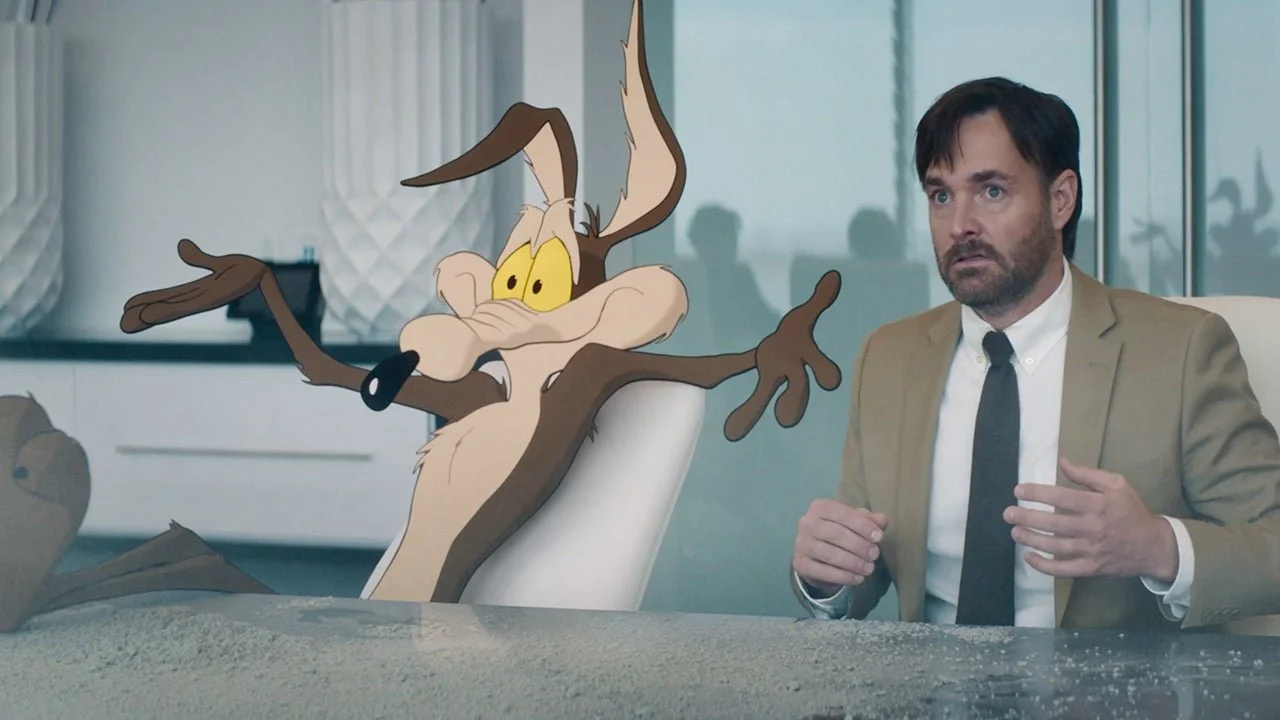
It’s a strange time to be a Looney Tunes fan.
After decades of omnipresence on American television and a strong resurgence in the 90s, the studio largely pushed them to the side following the financial underperformance of 2003’s Looney Tunes: Back in Action. Characters like Bugs, Daffy, Porky, and the rest mostly lived on in short-lived attempts at new TV revivals, adaptations pitched to the preschool crowd, or in the surprising nostalgia legacy for Space Jam.
Then, the advent of HBO Max brought on a demand for tons of new content, and fast. Warner Bros. broke out the Looney Tunes once more and began producing some of the best Looney Tunes-related media since the era of classic shorts from 1930-1963. You’d think this would be cause for celebration, but despite the high quality of these latest cartoons, the Looney Tunes brand continues to be buried as a result of business mergers and a general deprioritization that somehow ended up with these legendary characters at the bottom of the corporate ladder.
And yet, against all odds, the highly anticipated Coyote vs. Acme is hitting thousands of cinema screens at the end of August, the only family-friendly film in theaters for a whole month, and after nearly being deleted from history forever, this hilarious and zany movie has the chance to be the biggest Hollywood underdog (under-coyote?) story of the decade. But what happened with this film and why did it take so long for it to reach the silver screen? Let’s break it down:
2019-2023: You Oughta Be in Pictures
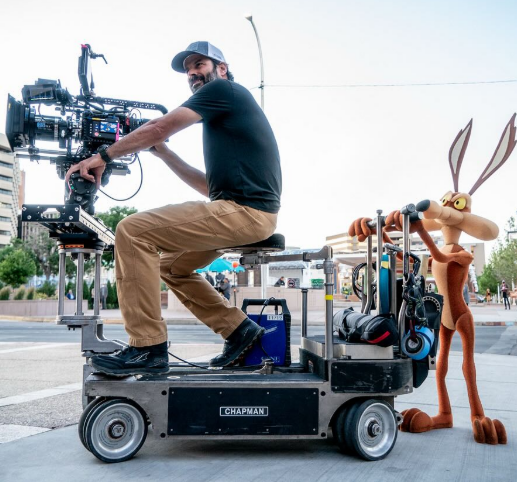
Camera Operator Juergen Heinemann and Assistant Camera Wile E. Coyote on the set of Coyote vs. Acme
The idea of making a feature film based around Ian Frazier’s New Yorker story “Coyote vs. Acme” has floated around Hollywood since the mid 90s, but it didn’t gain real traction until 2019 when Warner Bros. announced that director Dave Green (Earth to Echo) would direct a live-action/animation hybrid based on the story for the studio. Progress on the screenplay continued throughout the peak COVID years, with final credits going to newcomer Samy Burch - whose spec script May December was floating around Hollywood at the time - from a story developed by Burch, as well as James Gunn and Jeremy Slater. Gunn would go on to become a producer on the film as well, and help shepherd its production through a studio that trusted his creative impulses.
When the film finally began shooting in 2022 down in Albuquerque, New Mexico (the famed location that Bugs Bunny should have made a left turn at), it seemed like everything would be smooth sailing from here on out for the Coyote team. As for the rest of WB’s properties, things weren’t looking so hot.
In the early 2020s, WB divided their creative content priorities largely between theatrical releases (once theaters re-opened post-COVID) and their new HBO Max platform. Much of the newly-commissioned Looney Tunes content had been developed to go direct-to-streaming, such as Looney Tunes Cartoons, The Day the Earth Blew Up, and the now-canceled Bye Bye Bunny. The team at Warner Animation Group did great work with these cartoons, capturing the anarchic and fast-paced spirit of the classic shorts while still adapting them to modern sensibilities.
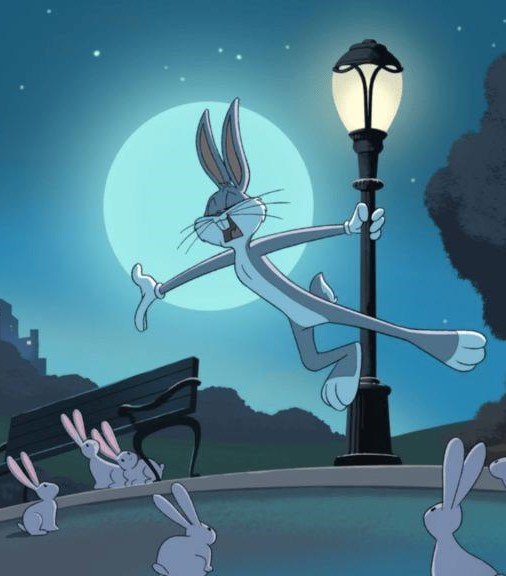
Looney Tunes star Bugs Bunny in concept art from the now-cancelled Bye Bye Bunny
But these titles and all the other direct-to-streaming titles were greenlit while Warners was owned under the conglomerate of WarnerMedia. When that corporation dissolved, WB merged with Discovery and the new owners immediately put the previous regime’s spending under a magnifying glass. The first goal of any corporate merger is to start cutting costs wherever you can, so a number of projects that were already well into production began getting the ax, such as Day the Earth Blew Up, Bye Bye Bunny, and other WAG titles like Batman: Caped Crusader or a movie based off The Amazing World of Gumball. The reasoning behind these cancellations was that the studio was no longer prioritizing direct-to-streaming titles.
What was more surprising were the cancellations of near-completed films Batgirl and Scoob!: Holiday Haunt. After all, Batgirl tied into WB’s storied comic book franchise partnership with DC and boasted a hefty $90 million price tag, while Scoob: Holiday Haunt was a sequel to the generally well-received 2020 animated film about the origins of the Scooby-Doo gang. It was practically unheard of for a studio to shelve a completed film attached to valuable IP, let alone at this price level, and for the work of hundreds if not thousands of artists and craftspeople to go unseen. Unlike the animated titles mentioned above, there would be no talk of these films finding home with a new distributor.
But the studio maintained that direct-to-streaming titles were not their priority at the moment and that they did not match the quality standard they hoped to achieve, so both films remain unseen to this day. Rumors abounded that WBD would be writing off both films for tax breaks, something that WBD has denied to this day.
Meanwhile, animation wrapped up on Coyote vs. Acme and the film entered the final stages of post-production, including scoring and test-screening for audiences. The film had been pushed from its July 21, 2023 release date (replaced by a little film called Barbie) and had not received a new release date yet, but with the good buzz that was building among people who had seen the film, there was no sign that anybody needed to worry about its future.
2023-2025: To Beep or Not to Beep
In November 2023, a year after the backlash from cancelling Batgirl and Scoob: Holiday Haunt, Warners announced that Coyote vs. Acme was completed, but the studio would not be releasing it. The initial reports from Deadline announced that WB would instead seek to write off the film in order to get a $30 million tax break rather than put money into releasing it or sell it to another studio.
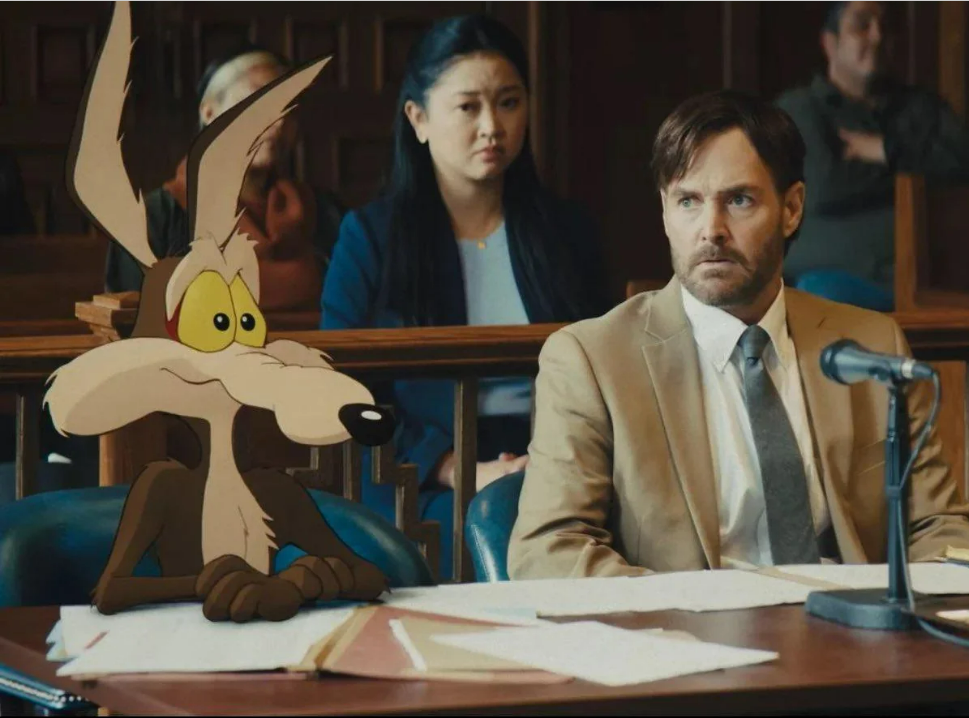
Wile E. Coyote (left) and Will Forte (right) in the only image of Coyote vs. Acme that was officially released to the public post-cancellation
The outrage was instantaneous. Smartly, the filmmakers knew to get out ahead of any accusations that Coyote vs. Acme didn’t adhere to WB’s standards of quality. Instead, the filmmakers, many below-the-line workers on the production, and a number of Hollywood figures who had screened the film all spoke up and asserted that the movie was actually a wonderful family film that already received fantastic scores from test audiences.
Additionally, a handful of leaks started popping up on social media with whatever items people had at their disposal. New production stills showed Forte and Cena alongside Wile E. Coyote and the Road Runner, BTS footage showed an impressive array of practical effects and set design gags, and a video from the film’s scoring featured a choir providing a chorus of the Road Runner’s signature “Meep Meep” to the “1812 Overture.” All of this provided fans and concerned moviegoers the world over a glimpse into the production of a film that was filled with so much love and affection for this legendary property, and incited even more anger that the film would never see the light of day.
Within four days, Warners reversed course…slightly. Instead of deleting the film from existence right away, they would allow other studios the chance to step up and buy the rights to the film from them. The details of what kind of price they were looking for or what stipulations they provided to potential buyers were never made public, but it was reported that buyers from major studios like Netflix, Amazon, and more had made offers on the film only to be rejected. In a sobering write-up from TheWrap in February 2024, producer Chris DeFaria described getting a call from a powerful executive who told him that the ones in charge of the decision “just wanted to close the books.” In other words, with no buyer who met WB’s terms, the film would likely end up deleted and destroyed.
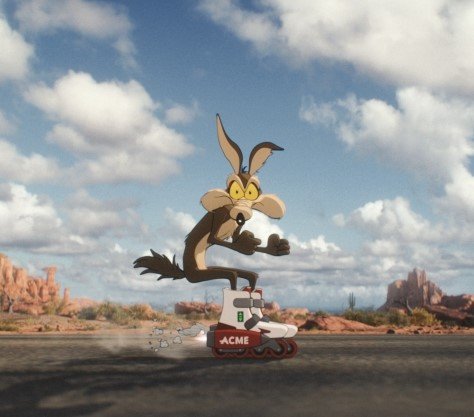
Wile E. struggling to get going on his ACME rocket skates in Coyote vs. Acme
A few days after the original announcement of the film’s cancellation, the cast and crew got together to watch the film for what everyone believed would be the final time, dubbing it a “funeral screening.” Star Will Forte, who knew of the decision but had not yet seen the final product, attended the screening expecting the film to be bad. Surely, if they were going to erase the movie from history, it must have turned out to be the worst film of his career, right? As he watched it, though, he said, “it was everything I wished the movie could have been and more. It was so special, which made it so frustrating and so devastating. The confusion was amped up, then frustration, then just searing anger.” Everyone in the theater knew they had made something they were immensely proud of, but the heartbreak that they may never get to share it with anybody else overcame any other emotion.
For the next year, it was radio silence. WB refused to comment on the film and fans continued to regularly protest, including one notable instance of a fan dressing up in a Wile E. Coyote costume and protesting outside the studio in the rain. But there was no news, and several assumed the film had gone in the shredder.
2025-Present: Fast and Furry-ous
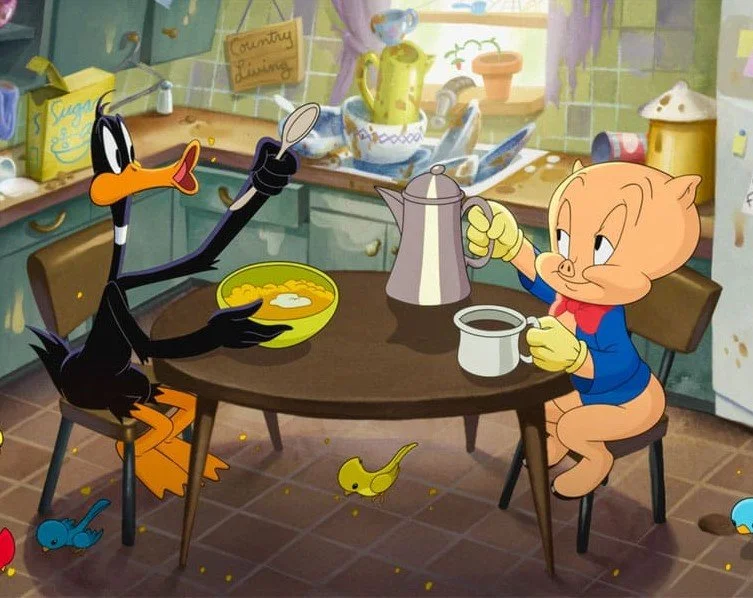
Daffy Duck and Porky Pig in The Day the Earth Blew Up: A Looney Tunes Movie, released by Ketchup Entertainment in March 2025
Remember that previously cancelled Looney Tunes film mentioned above, The Day The Earth Blew Up? This 2D feature-length sci-fi film starring Porky and Daffy as a pair of unlikely brothers had previously been canned by WBD as part of their push to focus less on HBO Max-exclusive programming, but they did allow buyers the chance to pick it up and release it separate from WB. It took a couple years to find the right buyer, but the small distribution and financing company Ketchup Entertainment picked it up in 2024. The film opened wide in March of 2025 to solid reviews from critics and audiences, but at a time when the U.S. box office was in a slump, the film only made $8.9 million domestically.
This may not seem like much, but for a film that cost a thrifty amount to make and didn’t see as much marketing spend as the major studios, everyone involved with the production was happy to see it finding an audience in theaters - especially since it was originally going straight to HBO Max anyways. Even at $8.9 million, the star power of Porky and Daffy was enough to make it Ketchup Entertainment’s highest-grossing theatrical release to date.
On the heels of the release of TDTEBU, Deadline dropped the bombshell that Ketchup would be purchasing the rights to Coyote vs. Acme for $50 million, aiming to give the film a theatrical run at some point in 2026. This move was met with huge acclaim from all the fans who fought hard to see the film’s release, but there was some skepticism within the industry. Mainly, people wondered if a company whose theatrical catalog never grossed over $10 million would be able to manage the marketing push required to turn Coyote vs. Acme from a piece of Hollywood lore into a bona fide theatrical hit.
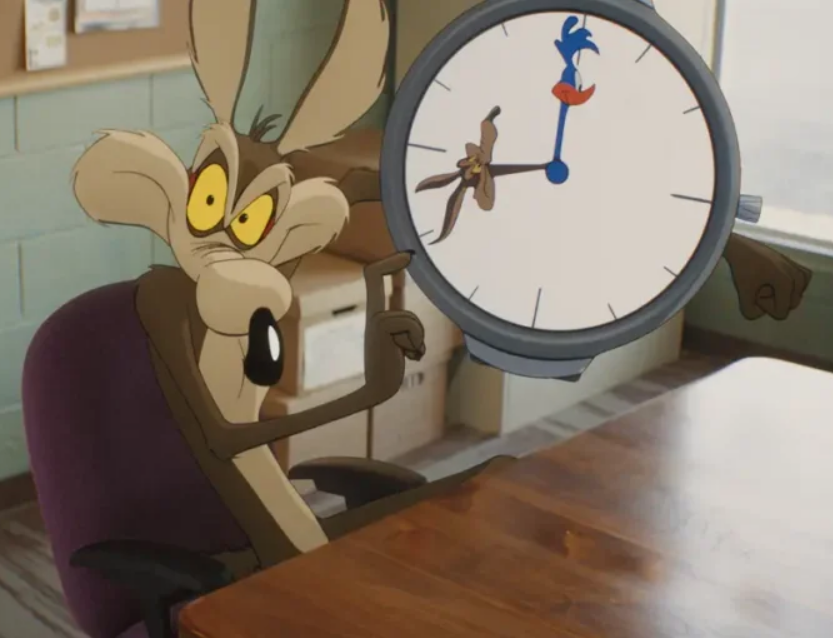
Wile E. with a unique way of keeping time in Coyote vs. Acme
The good news is that we’ll all find out soon enough. As of the writing of this blog, Coyote vs. Acme hits thousands of screens nationwide in a few days, and regardless of how it does at the box office, the early WOM proves it absolutely was worth rescuing. The film currently sits at 96% fresh on Rotten Tomatoes with over 100 reviews counted, the highest of any family film released this year, and the audience reviews from early access screenings on Sunday 8/23 have been absolutely glowing.
Obviously, the fact that the film is a truly great live-action/animated hybrid is a great victory, and if the film becomes a smash hit through word-of-mouth (something that’s likely since its only real competition in the family film market doesn’t come out for another month), then that would be the best-case scenario for this incredible underdog saga. But frankly, the victory has already been won. A film that was once going to be deleted from history, erasing the love and hard work of hundreds of people, is now opening on thousands of movie screens nationwide. Millions of moviegoers have the opportunity to laugh, thrill, or be moved by the film, and maybe even be a little bit inspired. If the film has the ability to change the life of just one person who watches it, then we’ve already won.. It’s a happy ending straight out of Hollywood.